
Eight questions for polar researcher and marine biologist Dr Julia Ehrlich
Commuting between Antarctica, Rostock and Berlin? For Dr Julia Ehrlich, it’s just part of everyday life. A glimpse into the life of a polar researcher.
by Lea Albring |
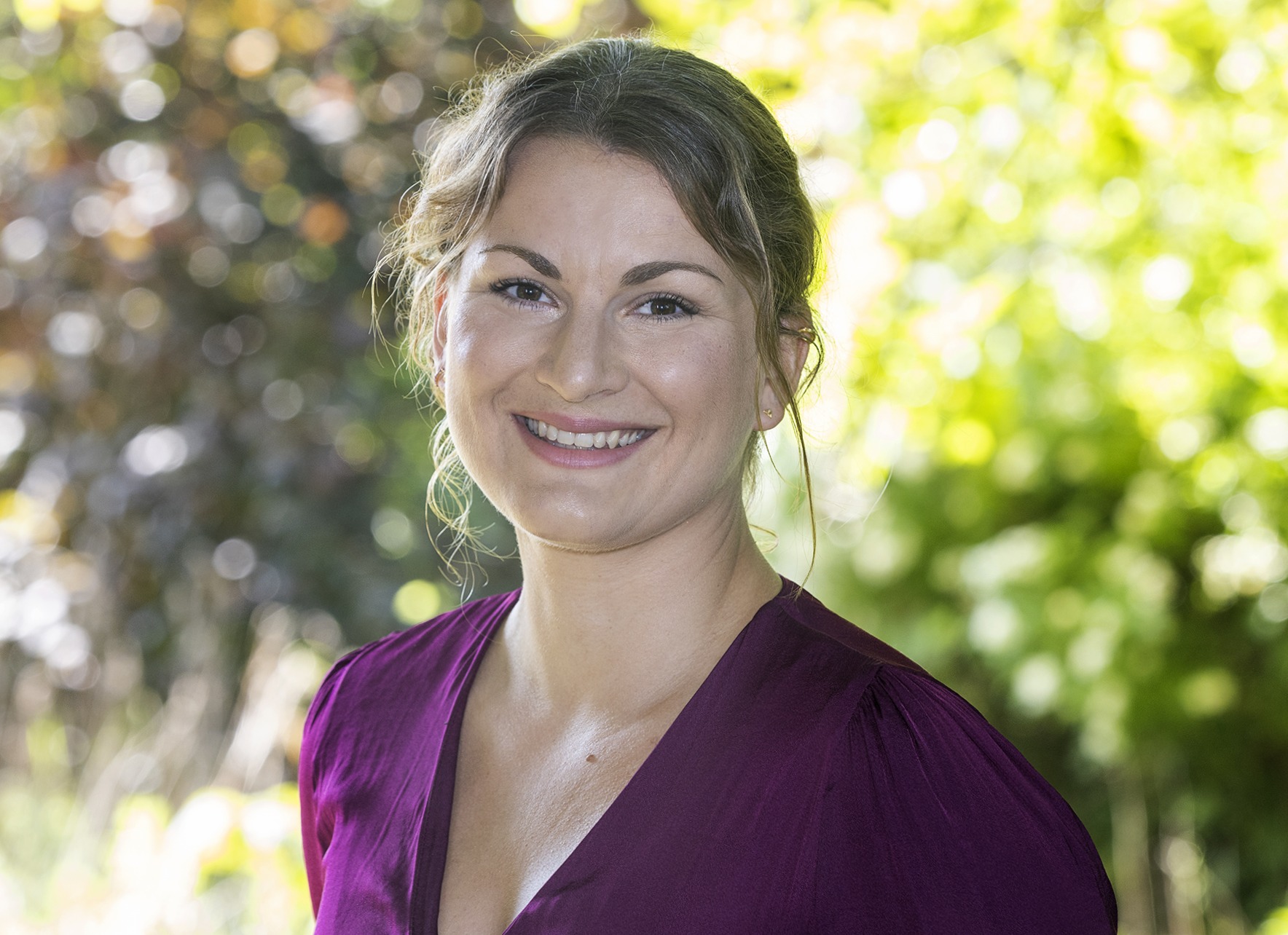
Between research expeditions and remote working: the marine biologist and coordinator of German Antarctic research regularly works at Office Club Berlin. Here she finds flexible workspaces, a quiet place to focus and the chance to connect with others away from her home office.
You work in polar research, which is quite an unusual field. What exactly do you do in this context?
I coordinate German Antarctic research as part of a funding programme run by the German Research Foundation. In this role, I oversee research projects at universities, connect scientists from various disciplines and ensure the organisational and structural framework for their collaboration. A large part of my work at the moment also involves scientifically planning expeditions on the Polarstern, the German research vessel, and organising them in such a way that different teams work together on larger research questions.
I am currently planning two expeditions, one of which is heading to the Weddell Sea in Antarctica. There, with the help of tagged whales and seals, we aim to identify their key feeding grounds and then investigate these specifically. We will be sampling the ice, the area beneath the ice, the sea itself and the seabed. The aim is to map the entire food web surrounding the key predators more comprehensively than ever before.
How is the coordination of large-scale research expeditions carried out, and what are the key considerations?
An expedition like this usually emerges from a very open process. Last time, we organised idea workshops at various universities, in which interested scientists could take part. Everyone submitted a short idea template in advance. This allowed us to first collect ideas, discuss them and identify potential expedition topics – a truly bottom-up approach.The biggest challenge is then to develop a common research question from many highly specialised perspectives. Researchers from biology, chemistry, physics and the earth sciences come together, with very different perspectives and levels of experience – both in their scientific careers and with regard to expeditions. Bringing everyone on board and turning this into a coherent overall project is actually the core of the work.
And then, of course, there’s life on board: an expedition lasts nine weeks, with around 100 people on a ship, about 50 from the crew and 50 from the scientific team. You live in a confined space, often in pairs in small cabins, and get to know each other well. If you get on well, this often leads to a very special bond and long-lasting friendships.
How did you originally get into marine and polar research? Was that always your goal?
To be honest, I’m not the classic marine biologist who always knew she wanted to go into polar research. For me, it was more a case of slipping into it – but a good one. I like to try things out, delve into topics and then see where they take me. During my bachelor’s degree, I studied biology at the Free University of Berlin, initially specialising in genetics. Later, I realised I wanted to change direction and went to Hamburg to do a master’s in marine biology. There, I worked as a student assistant analysing zooplankton and realised I’d found my niche. That’s how I ended up at the Alfred Wegener Institute, where I completed my master’s and later my PhD. The PhD was quite a challenge, as I largely funded it myself through grants. But when you’re truly passionate about a subject, you can make it work. At the same time, I undertook further training in international project management. It was precisely this combination that ultimately paved the way for my current job.
What motivates you in your job every day?
I’m particularly excited by the interface between science and coordination. I’m closely involved with the research topics, but at the same time I have a broader overview of what’s currently happening in Antarctic research in Germany. This means I get to see a lot, can bring things together and also build up a large network. That’s what makes the job incredibly exciting for me. On top of that, I see a lot of meaning in my work. I feel that what I do really makes a difference – both for the research itself and for the issues that concern us as a society. My field of research is the ice and sub-ice fauna in the Arctic and Antarctic, and I have already taken part in three expeditions myself. Many people imagine these regions as a desert, but in fact there is a surprising amount of life there, for example zooplankton and subglacial fauna, which are perfectly adapted to the habitat in the ice. It is particularly in the polar regions that we see the consequences of climate change very early on. I am therefore very interested in what this means for the finely tuned food chains and ecosystem functions.
What does your day-to-day work look like when you’re not on an expedition?
My tasks are quite varied. Of course, I answer a lot of emails, but in terms of content, almost every day is different. Much of what I do is actually something I’m doing for the first time, because, for example, there’s no set template for coordinating an expedition. So you often work your way through open-ended processes step by step.
That said, there are also recurring tasks: writing reports, coordinating grant applications or organising workshops funded through our programme. It’s precisely this mix of structure and uncharted territory that makes the job exciting for me.
How do polar research and co-working go together? What made you decide to become a member of the Office Club?
For me, the two go together surprisingly well. Fixed-term contracts are pretty standard in academia. After 13 years at various posts, I wanted to return to Berlin, my home town. I’m currently working at the University of Rostock, but I’m on site at least once a week and work remotely the rest of the time.
Working from home, I eventually found myself missing a place that brought a bit more structure to my daily routine. A friend of mine also works remotely, in a completely different job, and we thought: how nice it would be to combine the two every now and then. That’s how I ended up at the Office Club in early 2024, where I now co-work with my friend.
What I particularly like there is the combination of focused work and community. You can stay focused, but without that feeling of isolation that can quickly set in when working from home.
Which services or offerings from the Office Club do you use, and how do they support you in your day-to-day work?
I use the Flex Desk in Berlin. That’s ideal for me because my daily work routine isn’t always predictable. Sometimes I’m at conferences or in meetings, other times I need peace and quiet for applications and coordination tasks. That’s precisely why I really appreciate the flexibility of the service: I can adapt my workspace to my daily routine, rather than the other way round.
I usually work at the Office Club Prenzlauer Berg. Every now and then I also go to the Office Club Friedrichstraße, because I often find it a bit quieter there. It’s precisely this mix of flexibility and a focused working atmosphere that I really appreciate in my day-to-day life.
The Office Club Friedrichstraße location has stood for New Work and flexible working for over 20 years. In this article, we look back on more than two decades of the location’s history.
How do you manage to maintain a balance and switch off after a long day at work?
To be honest, that’s an ongoing project for me. In academia, there’s often no clear separation between work and leisure. Some periods are very intense, and emails can quickly pile up even at the weekend. So I try instead to find a balancing rhythm.
Fixed routines don’t always work, even when I try things like sport – specifically, playing handball regularly. Switching off works best for me when I really get out and about: in my campervan by a lake or in my garden, where I often meet up with friends. These little changes of scenery help me clear my head.
Are you also looking for a place to work in a focused and flexible way?
